Food Court Grease Trap Management: A Guide for Mall Operators
A food court in a major UAE mall might house 20-40 food outlets, all draining into a shared grease trap system buried in the basement service corridor. When that system fails, it does not affect one restaurant—it affects every outlet in the food court, the adjacent retail spaces, and potentially the mall’s main drainage infrastructure. The cost of a major blockage in a mall food court is measured in hundreds of thousands of dirhams of lost revenue across dozens of tenants, plus the repair bill, plus the municipality fine.
This guide is written for mall operators, facility managers, and property management companies responsible for food court drainage infrastructure in the UAE.
How Food Court Drainage Differs from Standalone Restaurants
In a standalone restaurant, the operator controls everything: the kitchen, the grease trap, the drainage connection to the municipal sewer. If the trap overflows, it is their problem and their cost.
In a food court, the drainage infrastructure is shared. Twenty or more tenants connect to a common drainage system that feeds into one or more large-capacity grease traps managed by the building owner or their FM contractor. The individual tenants have no direct control over the shared traps, and the building operator has no direct control over what each tenant puts down their drains.
This creates a structural misalignment: the party who generates the grease (the tenant) is not the party who pays for the shared trap cleaning (the landlord). And the party who pays for cleaning (the landlord) cannot control what goes down each tenant’s drain. Without a well-designed management program, this misalignment guarantees problems.
Tenant vs Landlord Responsibility
In most UAE mall lease agreements, responsibility is split as follows:
Tenant Responsibilities
- Installing and maintaining individual point-of-use grease traps or interceptors within their unit (typically 50-200 litre under-sink traps)
- Using sink strainers to prevent solid food waste from entering the drainage
- Not disposing of cooking oil down the drain
- Cleaning individual unit traps at their own expense
Landlord/Mall Operator Responsibilities
- Installing and maintaining the shared building-level grease trap system
- Scheduling regular cleaning of shared traps
- Ensuring the drainage system meets municipality requirements
- Providing documentation to municipality inspectors during building inspections
The critical gap is enforcement. Many mall operators include grease management requirements in the tenant fit-out guide but never actually verify compliance. The tenant installs a small under-counter trap during fit-out to pass initial inspection, then never cleans it. Six months later, it is completely solidified and bypassing, sending all FOG directly into the shared system.
Building-Wide AMC: The Only Sustainable Approach
The most effective approach is a building-wide Annual Maintenance Contract that covers both the shared building traps and the individual tenant traps under a single program managed by the landlord’s FM team.
Under this model, the landlord contracts a single grease trap service provider to maintain the entire food court drainage system on a fixed schedule. Individual tenant trap cleaning is either included in the service charge or billed directly to each tenant. The key advantage is consistency: every trap in the building gets cleaned on schedule, regardless of whether the individual tenant would have bothered.
Recommended Cleaning Frequencies for Mall Food Courts
Shared building traps (5000-15000 litres): Weekly during normal operations. Twice weekly during Ramadan, Eid, DSF, and other high-traffic retail periods when food court revenue peaks.
Individual tenant traps (50-200 litres): Weekly for heavy-FOG outlets (fried chicken, burgers, Indian, Chinese). Fortnightly for lighter outlets (juice bars, salad counters, bakeries).
Drainage line flushing: Quarterly high-pressure jetting of the shared drainage lines to remove accumulated grease deposits in the pipe walls.
The “One Bad Tenant” Problem
In every food court, there is at least one tenant that generates disproportionate FOG. It is usually the outlet doing the most deep-frying: the fried chicken brand, the fish and chips place, or the shawarma counter running fryers alongside the grill. This single tenant can produce more FOG than the next five tenants combined.
Without intervention, this tenant’s output overwhelms the shared trap, causes it to fill faster than the scheduled cleaning cycle can handle, and triggers blockages that the landlord must pay to resolve. The other 19 tenants are unaffected by and unaware of the problem until a backup floods the food court service corridor.
Solutions
Mandatory pre-treatment: Require high-FOG tenants to install larger individual traps (500-1000 litres instead of the standard 100-litre under-counter unit) as a condition of their lease.
Tiered service charges: Charge high-FOG tenants a higher share of the building’s grease trap maintenance costs, proportional to their FOG output. This can be structured as a higher service charge component or a separate grease management fee.
Biological dosing: Install biological dosing systems on the shared traps to continuously break down FOG between scheduled pump-outs. This provides a buffer against the inevitable variation in tenant FOG output.
Regular audits: Quarterly inspection of each tenant’s individual trap by the building’s contracted grease trap service provider, with results reported to the FM team. Tenants with non-compliant traps receive a written notice and a deadline to rectify.
Municipality Compliance for Mall Food Courts
Dubai Municipality inspects mall food courts as part of both the individual food establishment licensing (each tenant) and the building’s overall drainage compliance. The building owner is ultimately responsible for the shared infrastructure meeting DM requirements.
DM requirements for shared grease trap systems include:
- Trap sizing adequate for the combined peak FOG output of all connected food outlets
- Traps installed before the connection to the municipal sewer
- Regular cleaning by a DM-approved service provider
- Maintenance records maintained and available for inspection
- Proper waste disposal documentation showing that removed grease is taken to an approved disposal facility
In Abu Dhabi, ADAFSA adds requirements for waste manifests and traceability. In Sharjah, the municipality requires separate notification for any grease trap installation or replacement above 2000 litres.
Cost Implications of Poor Grease Management
A proactive AMC for a 30-outlet food court might cost AED 80,000-120,000 per year, covering weekly shared trap cleaning, monthly tenant trap cleaning, quarterly drainage jetting, and emergency callout provision.
A single major blockage in the shared drainage system can cost:
- AED 15,000-30,000 for emergency drainage clearing and repair
- AED 50,000-200,000 in lost revenue across all food court tenants during closure
- AED 10,000-50,000 in DM fines if the blockage causes a sewer discharge violation
- Incalculable reputation damage if the incident is visible to mall visitors
The AMC pays for itself after preventing a single major incident. Most food courts without proper management experience 2-3 significant drainage events per year.
Ramadan and Peak Season Planning
Food court revenues spike dramatically during Ramadan (iftar rush from 6-9 PM), Eid periods, Dubai Shopping Festival, and school holidays. FOG production spikes proportionally—often doubling or tripling during these periods.
A grease management program that works during normal operations will fail during peak periods unless the cleaning frequency is proactively increased. Smart FM teams build seasonal schedules into their AMC: weekly cleaning becomes twice-weekly during Ramadan, and additional pump-outs are pre-scheduled before major retail events.
How GTC Supports Mall Operators
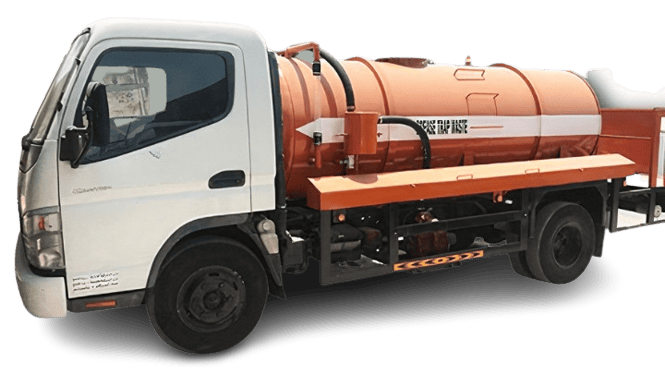
GTC has provided grease trap services to mall food courts across Dubai, Abu Dhabi, and Sharjah since 2009. We manage building-wide programs that cover shared traps, individual tenant traps, biological dosing, drainage jetting, and full documentation for municipality compliance.
Our food court management service is designed specifically for the shared-infrastructure challenges that mall operators face. We provide a single point of accountability for the entire food court’s grease management, with scheduled cleaning, tenant compliance audits, and 24/7 emergency response.
For a complimentary assessment of your food court’s grease trap infrastructure and a tailored AMC proposal, call +971 58 570 7110 or visit our contact page.