Grease Trap Blockage: Early Warning Signs and How to Prevent Disaster
A grease trap blockage never announces itself with a single dramatic event. It builds quietly over weeks, sometimes months, sending small signals that are easy to dismiss until the kitchen floor is ankle-deep in sewage-contaminated water during Friday dinner service. We have responded to hundreds of emergency blockage calls across Dubai, Abu Dhabi, Sharjah, and the Northern Emirates since 2009, and the pattern is always the same: the warning signs were there, they were ignored, and the resulting damage cost ten to fifty times more than the maintenance that would have prevented it.
Here is what to watch for, how blockages form, and what to do at each stage.
Stage 1: The Slow Drain (Weeks 1-4)
The earliest sign of grease accumulation is a sink that drains slightly slower than it used to. Not dramatically slow. Just enough that your dishwasher or prep cook notices they are waiting an extra few seconds for the basin to empty. At this stage, grease has begun coating the interior walls of the trap and the outlet pipe. The effective diameter of the drainage path is narrowing.
What to do: Schedule a professional cleaning within the next 7 to 14 days. At this stage, a standard grease trap cleaning service will resolve the issue completely. Cleaning costs start from AED 99, depending on trap size and location. This is the cheapest point of intervention.
Stage 2: Persistent Odour (Weeks 3-6)
Grease trapped in a partially blocked system begins to decompose. The bacteria breaking down the fats produce hydrogen sulphide gas, which smells unmistakably like rotten eggs. This odour seeps through sink drains, floor gullies, and sometimes through the trap’s access cover if the seal is worn.
Kitchen staff often mask this with cleaning products or attribute it to general kitchen smells. But rotten-egg odour from drains is never normal. It means organic material is decomposing in your drainage system, and the blockage is progressing.
What to do: Do not pour chemical drain cleaners into the system. Caustic chemicals damage trap internals, kill beneficial bacteria, and can emulsify grease temporarily only for it to resolidify further down the line, creating a worse blockage in the main sewer connection. Book a professional cleaning immediately.
Stage 3: Gurgling and Air Locks (Weeks 5-8)
When grease accumulation reaches 50% to 70% of the trap’s capacity, water flow creates air pockets in the constricted passages. You will hear gurgling sounds from sinks and floor drains, particularly when multiple fixtures discharge simultaneously. This is the drainage system literally choking.
At this stage, the trap is operating well below its rated capacity. Any surge in water volume, such as draining a large pot, running the dishwasher, or mopping the floor, can push the system past its limit and cause a backup.
What to do: This is no longer routine maintenance. You need same-day service. Call for an emergency cleaning before the situation escalates to Stage 4.
Stage 4: Water Backup and Overflow (Weeks 7-12)
Full or near-full blockage. Water backs up through floor drains, sinks overflow, and grey water pools on the kitchen floor. If the blockage is in the outlet pipe rather than the trap itself, sewage from downstream can also back up into the kitchen. This is a health hazard, a fire risk if water reaches electrical equipment, and an immediate grounds for closure by Dubai Municipality or ADAFSA inspectors.
The damage at this stage extends far beyond the plumbing bill. You face:
- Kitchen shutdown during cleaning and remediation (4 to 12 hours minimum)
- Lost revenue from cancelled services and bookings
- Potential fines from municipality inspection (AED 5,000 to AED 50,000 depending on severity and emirate)
- Floor, wall, and equipment damage from contaminated water
- Staff health risk from exposure to sewage-contaminated water
- Potential insurance complications if maintenance records are incomplete
How Blockages Form: The Mechanics
Understanding the physics helps explain why prevention works and reactive cleaning does not. A grease trap separates fats, oils, and grease (FOG) from wastewater by slowing the flow enough for FOG to float to the surface while solids settle to the bottom. Clean water exits from the middle of the trap.
This process works when the trap has sufficient capacity, meaning the grease layer on top and the sludge layer on the bottom have not consumed the clear-water zone in the middle. Industry standards, and Dubai Municipality guidelines, specify that a grease trap should be cleaned when FOG and sludge occupy 25% of the total trap volume. This is called the “25% rule.”
In practice, most kitchens exceed this threshold within 2 to 4 weeks of cleaning, depending on grease output. Kitchens with deep fryers, wok stations, or heavy butter/cream usage reach it faster. Once past 25%, efficiency drops sharply. Past 50%, the trap is functionally a straight pipe, offering no separation at all.
The Temperature Factor in the UAE
UAE kitchens face an additional challenge that operators in cooler climates do not: ambient temperature. During summer months, kitchen temperatures regularly exceed 40 degrees Celsius, and grease stays liquid longer in the drainage system. This sounds beneficial, but it actually means grease travels further into the drainage network before solidifying, creating blockages in harder-to-reach sections of pipe that are more expensive to clear.
Conversely, in air-conditioned kitchens during winter, the temperature differential between hot discharge water and cold trap surfaces accelerates solidification inside the trap. Both extremes increase blockage risk, which is why year-round maintenance schedules in the UAE should not have seasonal gaps.
Prevention: The Only Strategy That Works
There are no shortcuts to blockage prevention. Chemical treatments, enzyme products sold at hardware stores, and hot-water flushing all provide temporary relief at best and cause additional damage at worst. The only reliable prevention strategy has three components:
1. Scheduled Professional Cleaning
Monthly cleaning for most restaurants. Fortnightly for high-grease kitchens (fried food, Indian/Chinese cuisine, bakeries). An Annual Maintenance Contract (AMC) starting from AED 99/month ensures your schedule is maintained without relying on memory or staff initiative. Our cost guide breaks down pricing by trap size and service frequency.
2. Biological Dosing
A biological dosing system introduces grease-digesting bacteria into the trap between professional cleanings. This reduces the rate of grease accumulation by 40% to 60% in most installations, effectively extending the interval between critical thresholds. Dosing does not replace professional cleaning but significantly reduces blockage risk between services.
3. Kitchen Best Practices
Train staff to scrape plates into waste bins before washing. Never pour cooking oil down drains. Use sink strainers to catch food solids. These simple habits reduce the grease and solid load entering the trap by 30% or more.
Emergency Response: What Happens When It Is Too Late
If you are reading this article because your kitchen is already flooding, here is the immediate protocol:
- Stop all water use in the kitchen immediately. Turn off dishwashers, close taps, halt mopping.
- If water is near electrical outlets or equipment, switch off power at the breaker. Do not step into standing water near electrical connections.
- Open the grease trap access cover to relieve pressure if the backup is from the trap itself.
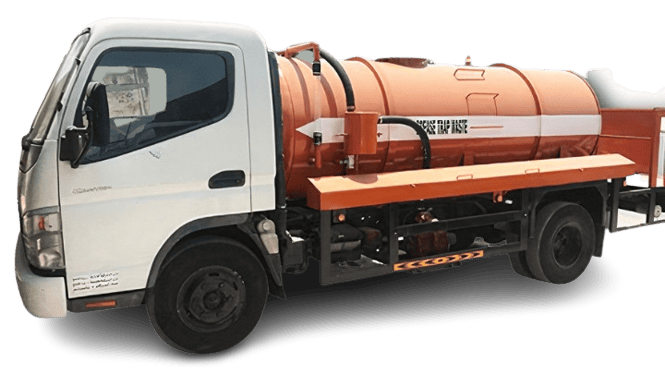
- Call for emergency service. GTC responds to emergency calls across Dubai 24/7.
- Document the situation with photographs for your insurance records and municipality reporting.
Emergency callouts cost more than scheduled cleaning, but they cost far less than the damage that continues while you wait.
Do Not Wait for Stage 4
If your kitchen drains are slowing down, your traps are producing odour, or you cannot remember when your last professional cleaning was, call Grease Trap Cleaning Services LLC now. We service all seven UAE emirates with same-day availability in most areas. Cleaning starts from AED 99. Call +971 58 570 7110 or request a callback online.