ADAFSA Grease Trap Requirements: Abu Dhabi Food Safety Compliance Guide
If you operate a food establishment in Abu Dhabi, Al Ain, or the Al Dhafra region, your grease trap compliance falls under the Abu Dhabi Agriculture and Food Safety Authority, not Dubai Municipality. While the fundamental engineering principles are the same, ADAFSA’s regulatory framework, inspection protocols, documentation standards, and penalty structures differ from DM’s in ways that trip up operators who assume one emirate’s rules apply everywhere.
This is particularly problematic for multi-location restaurant groups and franchises that operate across both Dubai and Abu Dhabi. A maintenance programme designed for DM compliance may leave gaps when applied to ADAFSA’s requirements. This guide covers the specific Abu Dhabi requirements, how they differ from Dubai, and what multi-emirate operators need to do to stay compliant in both jurisdictions.
ADAFSA’s Regulatory Framework for Grease Management
ADAFSA governs food safety in the Emirate of Abu Dhabi under Federal Law No. 10 of 2015 on Food Safety and Abu Dhabi Law No. 2 of 2008 establishing the authority. Grease trap requirements fall under ADAFSA’s food establishment licensing conditions and are enforced through the authority’s inspection and compliance division.
Key regulatory requirements include:
- Mandatory grease interceptors: All food establishments producing FOG-laden wastewater must install grease interceptors that meet ADAFSA-approved specifications. This includes restaurants, cafes, bakeries, central kitchens, catering companies, and food manufacturing facilities.
- Capacity requirements: The interceptor must be sized to handle the peak wastewater flow from all connected fixtures. ADAFSA follows international sizing standards (typically EN 1825 or equivalent) and requires that the installed capacity matches the establishment’s actual cooking operations, not just the number of covers.
- Regular maintenance: Food establishments must maintain grease interceptors through regular professional cleaning at intervals sufficient to prevent grease accumulation from exceeding operational limits. ADAFSA does not specify a fixed cleaning frequency but requires that operators demonstrate an effective maintenance programme.
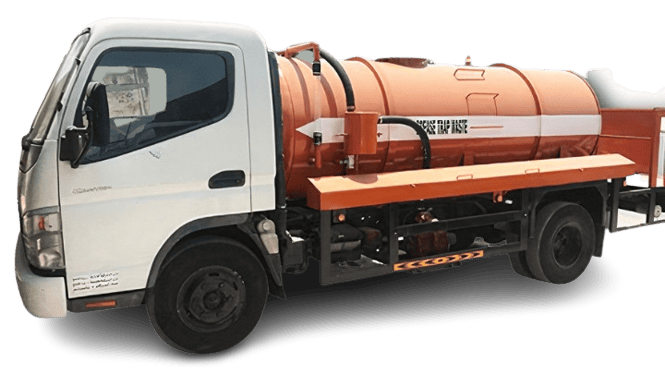
- Approved disposal: Grease waste must be collected and transported by licensed waste management contractors to ADAFSA-approved disposal or treatment facilities. Illegal dumping carries severe penalties.
How ADAFSA Differs from Dubai Municipality
Operators familiar with Dubai Municipality’s system will notice several practical differences when operating under ADAFSA:
Inspection Approach
DM inspections follow a structured checklist with specific pass/fail criteria (such as the 25% rule for grease accumulation). ADAFSA inspections tend toward a risk-based assessment model. The inspector evaluates your overall food safety management system, of which grease management is one component. This means the inspector has more discretion in assessing compliance, and the quality of your overall food safety programme influences how grease trap issues are viewed.
An establishment with a comprehensive HACCP plan, trained staff, and documented procedures that has a marginally overdue grease trap may receive a corrective action notice rather than an immediate fine. An establishment with no food safety system and a neglected trap will face the full weight of enforcement.
Documentation Standards
ADAFSA places significant emphasis on documented food safety management systems. For grease trap compliance, this means:
- A written cleaning and maintenance schedule that forms part of your food safety plan
- Records of each cleaning service including date, contractor details, condition found, work performed, and waste disposal documentation
- Evidence that the maintenance schedule is based on a risk assessment of your kitchen’s actual grease output, not just a generic monthly interval
- Staff awareness records showing that kitchen personnel understand grease management procedures
DM also requires documentation, but ADAFSA’s expectation that your maintenance schedule is derived from a risk assessment adds a layer of rigour. You should be able to explain why you clean monthly (or fortnightly, or weekly) based on your kitchen’s specific operations, not simply because that is what you have always done.
Penalty Structure
ADAFSA’s penalty framework operates on a graduated scale tied to the severity of the violation and the establishment’s compliance history. First-time violations for grease management typically result in a corrective action notice with a defined compliance period. Repeated violations or serious failures (such as grease waste contaminating food preparation areas) escalate to financial penalties and can ultimately lead to licence suspension.
Specific fine amounts are determined by ADAFSA’s enforcement committee and can range from AED 5,000 for minor maintenance lapses to AED 100,000 or more for serious or repeated violations involving environmental contamination or public health risk.
Equipment Approval
ADAFSA does not maintain its own grease trap approval list in the same way DM does. Instead, ADAFSA requires that installed equipment meets recognised international standards (EN 1825, ASME A112.14.3, or equivalent) and that the equipment is appropriate for the application. When specifying a new installation in Abu Dhabi, ensure the manufacturer can provide test certification against a recognised standard.
Inspection Frequency and Process
ADAFSA categorises food establishments into risk tiers that determine inspection frequency:
- High risk (full-service restaurants, hotels, catering): Inspected 2 to 4 times per year
- Medium risk (cafes, bakeries, limited menus): Inspected 1 to 2 times per year
- Low risk (packaged food retail, minimal preparation): Inspected annually
Inspections may be announced or unannounced. ADAFSA also conducts targeted inspections in response to complaints, food safety incidents, or as part of seasonal campaigns (Ramadan, public holidays, summer food safety drives).
During an inspection that includes grease trap assessment, the inspector typically:
- Reviews your food safety documentation, including the grease management section
- Physically inspects the grease trap (opens the cover, assesses grease level and condition)
- Checks that all grease-producing fixtures are connected to the trap
- Verifies cleaning records against the stated maintenance schedule
- Confirms waste disposal documentation from a licensed contractor
- Assesses staff awareness of grease management procedures through brief questioning
Compliance for Multi-Location Operators
Restaurant groups operating in both Dubai and Abu Dhabi face a common challenge: their corporate maintenance programme is designed around one emirate’s requirements and applied uniformly across all locations. This creates compliance gaps.
Here is what multi-location operators should address:
Dual Documentation Standards
Maintain separate compliance files for Dubai and Abu Dhabi locations. Your Dubai files should be structured around DM’s checklist-based inspection criteria. Your Abu Dhabi files should include the risk assessment basis for your maintenance schedule, which DM does not require but ADAFSA does.
Service Provider Licensing
Verify that your grease trap cleaning contractor is licensed to operate in both emirates. A contractor licensed by DM in Dubai may not hold the equivalent waste transport permits for Abu Dhabi. GTC holds the necessary licences and permits to operate across all seven UAE emirates, which eliminates this concern for multi-location clients.
Equipment Standards
A trap approved by DM in Dubai is not automatically ADAFSA-compliant in Abu Dhabi. Before installing identical equipment across locations in both emirates, verify that the manufacturer’s certifications satisfy both authorities’ requirements. In practice, traps from major manufacturers that hold EN 1825 certification are accepted in both jurisdictions, but documentation must be available.
Waste Disposal Routes
Grease waste from Dubai locations must go to Dubai-approved facilities. Waste from Abu Dhabi locations must go to ADAFSA-approved facilities. Your contractor should handle this automatically, but verify that waste manifests show the correct receiving facility for each emirate.
Northern Emirates: Sharjah, Ajman, UAQ, RAK, Fujairah
For completeness, food establishments in the Northern Emirates fall under their respective municipal authorities for building and health compliance. While these municipalities generally follow federal food safety guidelines, specific grease trap requirements, inspection frequencies, and penalty structures vary. A comprehensive compliance approach for operators in these emirates should include direct consultation with the local municipality’s food safety or public health department to confirm applicable requirements.
GTC services all seven emirates and is familiar with the specific requirements in each jurisdiction. Our service reports and documentation are structured to meet the compliance standards of all UAE authorities.
Building Your ADAFSA-Compliant Maintenance Programme
To build a maintenance programme that satisfies ADAFSA’s risk-based approach:
- Conduct a grease output assessment. Document your kitchen’s cooking methods, volume of fried/grilled/sauteed items, number of covers per service, and peak operating hours. This forms the risk assessment basis for your cleaning frequency.
- Set a cleaning frequency based on the assessment. High-grease kitchens (Indian, Chinese, fried food specialists): fortnightly. Standard restaurant kitchens: monthly. Low-grease operations (sandwich shops, juice bars): every 6 to 8 weeks. Our AMC plans can be tailored to any frequency.
- Document the rationale. Write a brief paragraph in your food safety plan explaining why your chosen frequency is appropriate for your kitchen. Reference the output assessment.
- Maintain records systematically. Keep cleaning reports, waste manifests, and any inspection correspondence in chronological order in a dedicated file. Digital copies backed up offsite are advisable.
- Train and document. Brief kitchen staff on grease management procedures and document the training. ADAFSA inspectors may ask staff directly about their awareness of proper practices.
ADAFSA-Compliant Grease Trap Services Across Abu Dhabi
Grease Trap Cleaning Services LLC has served Abu Dhabi, Al Ain, and the wider UAE since 2009. We provide fully documented cleaning services with service reports, photographic records, and waste disposal manifests that meet ADAFSA’s documentation standards. AMC plans start from AED 99/month. Call +971 58 570 7110 or visit our contact page to discuss your Abu Dhabi compliance needs.