People use “septic tank” and “holding tank” as if they mean the same thing. They don’t. They handle wastewater in fundamentally different ways, and confusing the two leads to the wrong maintenance schedule — and sometimes an overflow. Here is the clear difference and what each means for your property.
What a septic tank does
A septic tank partially treats wastewater on-site. Wastewater flows in and separates into three layers: solids sink to the bottom as sludge, fats and oils float to the top as scum, and the relatively clear liquid in the middle flows out to a soak-away or drain field where it disperses into the ground. Bacteria inside the tank continuously break down the solids, reducing their volume over time.
Because a septic tank treats and discharges, it does not fill up as quickly — but sludge still accumulates and must be pumped out periodically before it builds up enough to escape into the drain field and clog it.
What a sewage holding tank does
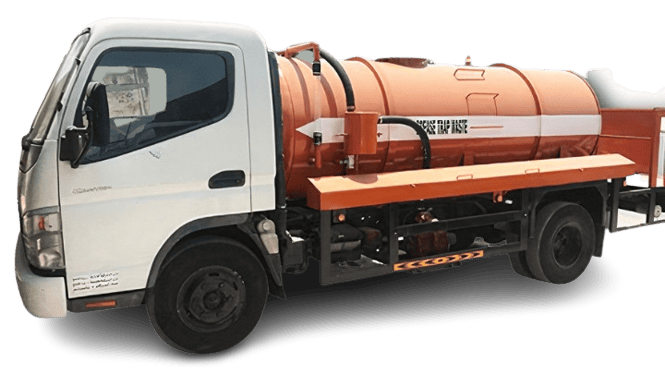
A sewage holding tank does no treatment at all. It is a sealed container that simply stores all the wastewater your property produces until it is pumped out and tankered away. Nothing leaves the tank except by the suction hose. There is no drain field and no bacterial breakdown to rely on.
This means a holding tank fills steadily and must be emptied on a regular, predictable schedule. Miss an emptying and it overflows — there is nowhere else for the wastewater to go.
Side-by-side comparison
- Treatment: Septic tank treats and discharges liquid; holding tank stores everything, treats nothing.
- Drain field: Septic tank needs one; holding tank does not have one.
- Emptying frequency: Septic tank is pumped occasionally to remove sludge; holding tank is emptied frequently because it stores 100% of the wastewater.
- Failure mode: A neglected septic tank clogs its drain field; a neglected holding tank overflows.
- Running cost: Holding tanks usually cost more over time because they are emptied far more often.
Which one do you have?
If your wastewater system has a soak-away or drain field and is only pumped now and then, it is almost certainly a septic tank. If it is a sealed tank that needs a tanker on a regular cycle and has no drain field, it is a holding tank. Many properties in areas not connected to the main sewer network rely on one of these systems, and knowing which you have determines how often you need a tanker.
Keeping either system healthy
Both need regular emptying by a proper tanker service that disposes of the waste at an approved facility. For septic tanks, removing sludge on time protects the drain field, which is the expensive part to repair. For holding tanks, a reliable schedule prevents overflow. Our septic and sewage tank cleaning team can assess your system, advise on the right interval, and handle compliant disposal.
Frequently asked questions
How often should a septic tank be emptied?
It depends on tank size and the number of people using it, but most septic tanks need de-sludging periodically — commonly once a year or so — before sludge builds up enough to reach the drain field.
How often should a sewage holding tank be emptied?
Far more often than a septic tank, because it stores everything. The exact frequency depends on tank size and usage; many need emptying every few weeks. Track your fill rate after the first couple of pump-outs to set a safe schedule.
Can I convert a holding tank to a septic system?
Sometimes, but it depends on ground conditions and approvals for a drain field. It is a site-specific question — ask a professional to assess your property first.