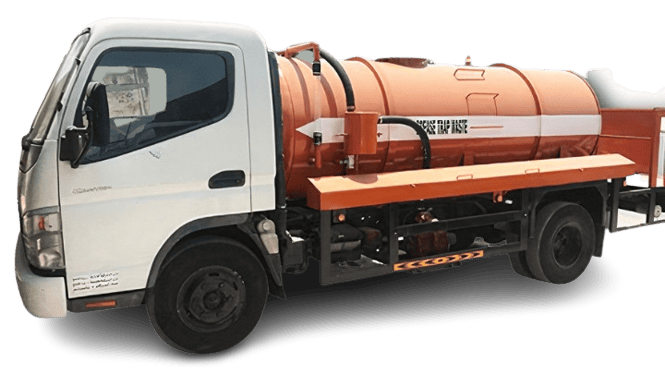

If you’re opening a restaurant, cafe, or any food business in the UAE, a grease trap isn’t optional — it’s a legal requirement. Dubai Municipality, Abu Dhabi’s ADSSC, and Sharjah Municipality all mandate grease interceptors for commercial kitchens. Skip it, and you’re looking at fines starting at AED 5,000 and going up to AED 50,000, plus potential trade licence suspension.
But compliance aside, a properly installed and maintained grease trap is one of the smartest investments a kitchen can make. Here’s what it actually does for your business — and what goes wrong when you ignore it.
What a Grease Trap Does (and Why It Matters)
Every time you wash dishes, clean a fryer, or rinse down a cooking surface, fats, oils, and grease (FOG) go down the drain. Without a grease trap, that FOG cools and solidifies inside your drainage pipes. Within weeks, you’ve got partial blockages. Within months, you’ve got full blockages, sewage backups, and an emergency plumber bill that could’ve been avoided entirely.
A grease trap sits between your kitchen fixtures and the main sewer line. It slows the wastewater flow, lets the FOG float to the surface (grease is lighter than water), and traps it in a chamber. Clean water passes through to the sewer. Simple concept, but it prevents three serious problems.
Problem 1: Blocked Drains and Sewage Backups
This is the most common and most expensive consequence of poor grease management. A blocked main drain line costs AED 1,500–3,000 to clear with high-pressure jetting. And that’s assuming the blockage hasn’t backed up into your kitchen — if it has, you’re looking at a health department closure until it’s resolved.
We service over 600 restaurants in Dubai and Sharjah. The ones that stick to a regular cleaning schedule almost never have drain emergencies. The ones that skip cleanings are the ones calling us at 11 PM on a Friday night with sewage on the kitchen floor.
Problem 2: Foul Odours and Pest Attraction
Grease that sits in pipes for too long decomposes. It produces hydrogen sulphide — that rotten egg smell that’s impossible to mask with air fresheners. Worse, decomposing FOG attracts cockroaches and drain flies. Both are health code violations if an inspector finds them.
A grease trap that’s cleaned on schedule — every 1–4 weeks depending on your kitchen volume — keeps FOG contained and out of your pipes. No decomposition, no smell, no pests. Consider adding a bio-dosing system between cleanings to break down residual FOG in the lines.
Problem 3: Municipality Fines and Licence Risk
Dubai Municipality conducts both scheduled and surprise inspections under DM Technical Guideline No. 13. They check that your grease trap is installed, properly sized, and regularly cleaned. They’ll ask for your cleaning certificates — signed records from a DM-approved cleaning contractor showing dates and results.
First offence fines start at AED 500. Repeat violations escalate quickly — up to AED 50,000 — and can trigger a review of your food trade licence. Abu Dhabi and Sharjah have similar enforcement. Check our FAQ page for more on compliance requirements by emirate, or read the full DM penalty schedule.
How Often Should You Clean Your Grease Trap?
It depends on your kitchen. Here’s what we recommend based on years of servicing UAE kitchens:
Heavy frying (shawarma, fried chicken, Indian/Chinese): Weekly cleaning. These kitchens produce 3–5x more FOG than average. A 50-litre trap fills up in days.
Standard restaurant (mixed menu, moderate frying): Every 2 weeks. Most Dubai restaurants fall in this category.
Light kitchen (cafe, bakery, salad bar): Monthly cleaning is usually enough. But check the trap level weekly — if the FOG layer is thicker than 25% of the trap depth, it needs cleaning regardless of schedule.
GTC provides scheduled cleaning services with DM-approved certificates after every visit.
Installation: What to Expect
Installing a grease trap is straightforward for experienced plumbers. The process:
1. Site assessment — We measure your fixtures, calculate FOG output, and recommend the right trap type and size.
2. Supply — We carry PVC, mild steel, and stainless steel traps from 25 litres to 5,000+ litres. See our supply and installation page.
3. Installation — Under-sink traps take 2–3 hours. Floor-mounted units take half a day. In-ground interceptors require 1–3 days including excavation.
4. Compliance certificate — We provide installation documentation you can present to municipality inspectors.
If you’re not sure what type of trap your kitchen needs, read our guide on avoiding costly grease trap buying mistakes — it covers sizing, materials, and common pitfalls.
The Cost of NOT Having a Grease Trap
Let’s compare the numbers:
With a grease trap: AED 1,500–5,000 for the unit and installation, plus AED 300–600 per month for regular cleaning. Total first-year cost: roughly AED 5,000–12,000.
Without one: AED 500–50,000 in municipality fines, AED 1,500–3,000 per drain emergency (and you’ll have several), plus potential trade licence suspension that shuts your entire business. One restaurant we know spent AED 35,000 in a single year on drain emergencies and fines before they finally installed a proper trap.
The maths is simple. A quality stainless steel trap pays for itself within the first year.
Frequently Asked Questions
Is a grease trap required for all food businesses in the UAE?
Yes. Any establishment that produces fats, oils, or grease as part of food preparation must have a compliant grease interceptor. This includes restaurants, cafes, bakeries, cloud kitchens, hotel kitchens, and food trucks with permanent prep facilities.
What type of grease trap is best?
For most UAE kitchens, a stainless steel floor-mounted trap offers the best balance of durability, performance, and cost. For large kitchens (200+ seats), in-ground interceptors are required. See our guide for hotel and resort kitchens for more on large-scale setups.
How do I know if my grease trap needs cleaning?
Check the FOG layer thickness. If it’s more than 25% of the trap depth, it’s time. Most kitchens should clean every 1–4 weeks. If you’re smelling sewage or drains are slow, you’re already overdue.
Does GTC provide cleaning certificates?
Yes. Every cleaning visit includes a signed certificate from our DM-approved technicians, which you can present during municipality inspections.
Need a grease trap installed or want to set up regular cleaning? Call +971 58 570 7110 for a free site assessment across Dubai, Abu Dhabi, Sharjah, Ajman, RAK, Fujairah, and UAQ.