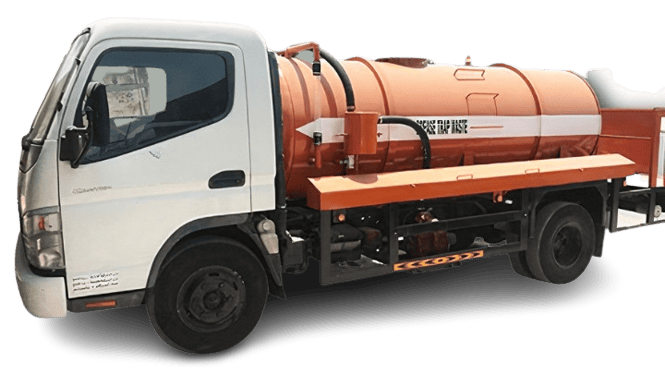

If your property in the UAE runs on a septic tank or a sewage holding tank rather than the mains sewer network, the single most important maintenance question is simple: how often does it need emptying? Leave it too long and you risk overflow, odour and a health hazard; do it too often and you are paying for collections you do not need. Here is how to get the timing right.
The short answer
Most residential septic tanks in the UAE need emptying every 6 to 12 months. A sewage holding tank on a low-occupancy property may last a little longer, while high-occupancy sites — labour camps, busy villas, canteens and construction accommodation — often need collection monthly or even weekly. The right interval depends on your specific tank and how much wastewater you generate.
What determines the frequency
- Tank size: a larger tank holds more before it needs emptying.
- Occupancy: the number of people using the property is the biggest single factor — more people means more wastewater.
- Property type: a family villa behaves very differently from a 200-bed labour accommodation or a restaurant with heavy kitchen use.
- Tank type: a septic tank that partially treats and discharges to a soakaway fills more slowly than a sealed holding tank that stores everything.
- Water usage habits: gardens, pools and high water use all add to the load.
Typical intervals by property type
- Family villa (septic tank / soakaway): every 6–12 months.
- Large villa or compound: every 3–6 months.
- Labour or staff accommodation: weekly to monthly, depending on headcount.
- Restaurant or cafeteria: monthly, often alongside grease trap cleaning.
- Construction site (holding tank): as often as weekly during peak activity.
Signs your tank needs emptying now
Do not wait for the schedule if you notice any of these — they usually mean the tank is at or near capacity:
- Slow-draining sinks, showers or toilets across the property.
- Gurgling sounds from drains.
- Persistent bad odour indoors or around the tank.
- Wastewater or damp patches surfacing near the tank or soakaway.
- Drains backing up, especially on the lowest floor.
Why you should not leave it too long
An overfull tank can back up into the building, overflow into the ground, or damage the soakaway so it stops draining — an expensive repair. Discharging sewage into the environment is also an offence in every emirate. Regular, scheduled collection is far cheaper than an emergency call-out and a clean-up, and it keeps you compliant. It is exactly why we recommend a set schedule after a free site survey.
Booking a compliant collection
Whatever your interval, the tanker that empties your tank must be licensed and must discharge at a government-approved treatment plant — not dump the waste illegally. GTC provides scheduled and on-demand sewage water collection across all seven emirates, with disposal at approved facilities. See how the rules work in your emirate on our sewage tanker regulations guide, or jump straight to your area: sewage collection in Dubai, Abu Dhabi tanker service or Sharjah sewage removal.
Frequently asked questions
How do I know my exact tank size?
If you do not have the drawings, our team can estimate capacity during a free survey and recommend a collection interval from there.
Can I switch from on-call to a fixed schedule?
Yes — a fixed schedule is usually cheaper per visit and means you never reach overflow. We set it based on how quickly your tank fills.
Is emptying the same as cleaning?
Emptying removes the contents; a full clean also de-sludges and rinses the tank. For septic tanks we recommend a periodic de-sludge, not just liquid removal.